 Hylozoic by Rudy Rucker
My rating: 3 of 5 stars
Hylozoic by Rudy Rukker
I recently added about twelve books to my library. They were all bargain books, but were also authors whose work I've not yet read. Hylozoic is book two to a series, but there are enough breadcrumbs in the book to fill in any blank details necessary to bring a reader up to speed. This is a good thing because of many of the made-up words and colloquialisms. This is a book about a singularity phenomenon that takes the world by storm and makes everyone aware that all living things have awareness and allow them to Teep (telepathically) each other and inanimate objects. And it's a novel that's hard to follow; not because it's book two and not because the science is most the time hand-wavium enough to suggest that this was someone’s thought experiment that tried to manifest on paper. It's more a matter of having characters that are so disconnected despite the fact that the whole concept is supposing that they are connected with everything.
We start the story with newlyweds Jayjay and Thuy trying to put together their new home in what almost sounds like a secluded area where they can literally commune with nature. The biggest conflict seems to be with the nearby stream named Gloob who is not excited about new neighbors moving rocks and other features away from his pleasant flow. There’s a good thirty five pages of setting things up, which for a new reader is good because it helps realize what you're getting into.
For the most part the science sounds like magic and it acts a lot like it also. But there are rules and Jayjay has a potential for getting too into things when dealing with Gaia so he has to avoid it like an addict, which is probably the first noticeable conflict. But this is a slow moving story and even after he slips off the wagon on his honeymoon night leaving Thuy to go to bed alone, it takes even longer before the reader begins to realize that Jayjay's habit has led to the first step in an alien invasion.
As to the magic world, I was almost ready to draw comparisons to Diane Duane’s Wizard series; but this story contains too many elements that sound more like Bill and Ted’s Awesome adventures. Mix that with Charles Stross Singularity and banal mentions of body functions and slowly add in some disturbing underage sex elements it becomes apparent that though it reads like Young Adult it quickly becomes something I wouldn't suggest to my grandchildren.
There’s a story in here somewhere and I made it all the way to the end. It is about alien invasion. Two races; the birdlike Pengo and the stingray like Hrull are enabled access to Earth through the process that brought the singularity. While the Pengo are after our world with the thought of driving us to extinction, the Hrull want people who can Teep to help push them through the universe. And the Earth is left with the most unlikely group of people to save it; although they have already saved the Earth once. But it's difficult to sort out what the real conflict is in the story and at one point this reader almost thought it might be a matter of who the father of the baby was, but I don't want to spoil the story so I'll leave it at that.
If you're looking for something that is strictly fantasy in a world of Telepathic, Teleporting Magic that is explained through technology derived of the singularity (which makes it mostly inscrutable to us mortals) this is the book for you. I want to call it SFF, but it’s really mostly meant for Fantasy readers; though there might be some put off about having too much fascinating but strange science in their fantasy.
J.L. Dobias
View all my reviews
 Consider Phlebas by Iain M. Banks
My rating: 3 of 5 stars
Consider Phlebas (A Culture Novel Book 1)by Iain M. Banks
I have a stack of books, that are getting old, that I finally dipped into: one was Perdido Street Station by China Mieville and another was Consider Phlebas, which I had forgotten I had. So after finishing Mieville I started on Banks. This was an interesting read that almost put me off at the very onset with a whole bunch of grossness (was it really necessary?). Unfortunately as far as gross scenes, it doesn't get better. Somewhere along the way someone must have recommended that the first thing you want to do is gross (shock) the reader.
I liked the idea of the changer and that he worked for the warrior like beings Idirans (three legged three meter tall alien). Banks had me there and he could have just forgotten all the grossness; but, no, that wasn't going to happen. I don't mind being taken out of my comfort zone, but I expect it to be accompanied by good writing and a solid plot. Unfortunately the plot wandered all over the place and left me wondering why some of the grosser parts had to be in there at all.
Horza the changer is saved from an ignominious death and is to be sent to an old post on Schar's world; a Planet of the Dead; protected by the Dra' Azon Quiet Barrier; a place that Horza once worked, to find the Culture mind that hid itself there. Horza is the Idiran's one hope in retrieving the most advanced technology the Culture has produced; and that's the only reason he is still alive.
But before going there we need to divert him and what better way than to have the Culture attack the ship that saved him, thus leaving Horza floating in space. A man size being in a suit floating in space, trying not to be picked up by the Culture yet is somehow found by a bunch of pirates who have faulty equipment and the combined IQ of a group of thugs. They only stop to salvage the suit; saving Horza is mostly a mistake.
Lucky for Horza he wakes up in time to be forced into a duel to the death, to take another crew members place. From there Horza begins to plot how he will impersonate the captain, Kraiklyn, and divert this pirate ship to Schar's world. This is done through the long route. The Captain of the Clear Air Turbulence is a man with many plans, but soon we discover that his intelligence and resources are limited and his plans go amiss and awry while delaying Horza's journey. The captain's greatest skill seems to be in losing his crew to his plans; all of which are what he considers easy-in and easy-out. As to how these serve the story, it might be mostly so that the crew will get whittled down by the time Horza takes over.
The second disastrous plan takes them to the vast Orbital ring at Vavatch where Horza gets separated from Kraiklyn and what little will be left of the crew, in order to entertain us with more grotesque that seem to serve only the purpose of getting Horza a shuttle to use to find Kraiklyn and crew (though for quite some time it's uncertain who might have survived the disastrous mission).
Once he links up with the CAT and crew, Horza is ready to transform and take Kraiklyn's place, but we have to endure the game of Damage (that is taking place here in the Orbital because of the impending doom of the Orbital). Damage is a high risk game with some really strange rules and high payoff that only serve those who make it out of the disaster zone in time. It has nothing to do with the plot other than something Horza seems doomed to endure to eventually kill off Kraiklyn, so he can take over the ship.
It's about halfway through the book; the crew is down to the bare bones and further since it seems low enough that Kraiklyn was convinced he needed one more body. That body turns out to be Perosteck Balveda, a Culture agent that Horza has had the bad luck to run into earlier and who he now has to neutralize before getting started. Horza decides to keep her alive which, within the story and characters, makes perfect sense; but for a majority of the second half this also seems to neutralize her as a major character even though she seems integral to the story. After a protracted yet exciting escape scene the real adventure begins at around three fifths of the way through the novel.
This novel has a lot of action and a gross amount of blood, gore and violence and has a steady pace of all of those with little rest in-between. Once again if it all moved the story forward and had some purpose it would be easier to swallow. But the side trips seemed mostly meant as a means of introducing these elements for shock effect until we get to the Damage game, which is more shock effect if not a bit of cultural shock in trying to understand how the people on the Orbital Ring seemed to justify their life, which at best is a half life. But if we were to characterize the first half as moving forward then it might be the mood setter for the second half to help the reader see that when things start to look bleak for our characters it's because they are bleak and will continue to be so.
Don't expect a sunny ending.
The major plot concludes, not too satisfactorily for this reader and though there is a bit of a twist to the end of the Horza plot there is more to read in an Appendices that would like to go on to explain the Culture and the Idirans and their war. This is followed by a Dramatis Personae.
The important part is an Epilogue at the very end where there is a bit of a twist that can only be fully appreciated and understood from reading the Dramatis Personae.
It would be ridiculous to try to second guess the author or for that matter the editors and publishers for the reason for this type of ending; but if the reader slogs through the whole mess to the end as did this reader then you should do yourself the favor of slogging through these three parts to acquire the full effect of the story.
I recommend this to anyone who likes a lot of blood, gore and violence in a consistent relentless pace along with a rather thin plot and some interesting Science Fiction elements along the way. Maybe we could call this a Dark Horror and Dystopic SFF.
J.L. Dobias
View all my reviews
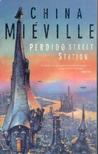 Perdido Street Station by China Miéville
My rating: 3 of 5 stars
Perdido Street Station (New Crobuzon Book 1) by China Mieville
Some like to characterize this novel as steam-punk. I would be hard pressed to prove that as a valid genre though it's not for want of China Meiville filling it with spattering of elements that might easily take people there. There are some gaslight elements and perhaps that same type of despair rooted in much of the landscape of Dicken's novels that were contemporary to the time of Victorian Age. China Mieville has included many elements that make this closer to a Science Fiction Fantasy with heavy emphasis on the fantasy. Magic and industry that might mirror near to steam and gear and modified humans mixed with several alien races of Birdmen, Bug-men, Cacti-men, and fish-men like something out of Flash Gordon. But they've all landed in the city of despair named New Crobuzon. This is a sprawling and ambitious novel that might often offer more than many readers can chew and often leaves distaste and dissatisfaction.
The novel begins with a first person account from someone heading into the great city. It is this description we want to look at.::
The river twists and turns to face the city. It looms suddenly, massive, stamped upon the landscape. Its light wells up around the surrounds, the rock hills, like bruise-blood. Its dirty towers glow. I am debased. I am compelled to worship this extraordinary presence that has silted into existence at the conjunction of two rivers. It is a vast pollutant, a stench, a klaxon sounding. Fat chimneys retch dirt into the sky even now in the deep night.
The reader should take note of this, because this sets the mood for the remainder of the novel. It's as though when it drops into third person narrative that it is still Yagharek telling the story from his lofty yet fallen position of someone force marched to a place of death when his spirit is in the sky. Yagharek is of the garuda, an intelligent species of manlike bird, and has, through what he'd have the reader believe is a perversion of justice, had his wings savagely cut from him. He searches out Isaac as someone he believes might be able to restore to him the power of flight.
Isaac is a failed academic who now is a researcher who specializes in both the scientific and magic though he eschews those who modify humans, because most modifieds are from the cities perverted justice system: performing modifications that fit the crime of the convicted criminals.
Isaac's one bright spot in life is Lin.
Lin is an artist; and an insectoid of the khepri. Khepri are similar to humans; except China uses Lin to describe this for the reader to give it a bit from the other direction.
Humans have khepri bodies, legs, hands; and the heads of shaved gibbons, she had once told him.
The novel is a grim dark fantasy that frames a second story that is a horror of unstoppable monster moths with a destructive purpose that might compare to the creatures in the movie Aliens. Isaac and Lin could be considered the main protagonists, but there are many more and the way that the narrator describes the city it makes New Crobuzon as much a character as it is a setting and that might be what gets in the way when the horror starts.
To compound the image of the city as a character we have Isaac early on compare himself to the city when talking to Yagharek.
"I think of myself as the main station for all the schools of thought. Like Perdido Street Station. You know of it?" Yagharek nodded. "Unavoidable, ain't it: ****ing massive great thing." Isaac patted his belly, maintaining the analogy.
Isaac goes on to tell Yagharek that he thinks that's what he needs; which Yagharek earlier echoed as his reason for coming to the city. Later Yagharek speaks of the city as his unwanted companion when he tries to hide from it on the roof of Isaac's building.
So it chastises me when I lie there, suddenly threatening to pull me from my perch into the wide stinking river, clutching my feathers, fat petulant air warning me not to leave it; but I grip the roof with my claws and let the healing vibrations pass from Grimnebulin's mind through the crumbling slate into my poor flesh.
It's Isaac's obsession with the science, the knowledge behind trying to help Yagharek that leads to the ultimate error that helps cause the later horror; just as it is Lin's obsession with her art that puts her in danger with the gangster Mr. Motley. And ultimately both become the recipe for tragedy.
Because the city takes on a life of its own, it dominates every chapter and protracts the action by lengthening the narrative throughout. Even during the tensest moments with the Moths sucking the life out of the city there are long moments of continual description often adding more of the same gritty touches that pervade the entire novel, as though the narrator fears we might forget where we are while under the thrill of the hunt.
There are three agencies working against each other throughout the framed story of the terror: Isaac's group; the government forces; and the underworld. This doesn't include such fascinating characters as the Weaver and the Artificial Intelligent Construct Council. The Weaver would almost be a deus ex machina if it weren’t for the fact that it seemed quite erratic about its purpose and allegiance; and it seemed more interested in observing Isaac and his Chaos engine at work, than in helping. Weaver also for some inexplicable reason collected ears from most of Isaac's team.
Now to get to some rough parts.
The city as a character begins early on to get in the way, because it often is redundant in showing the filth of the city and it always interferes with the action because the readers have to take the long way around to get somewhere. What I mean is the shortest distance between two points in New Crobuzon is always somewhere new that desires a long gruesome description before they can walk through.
There are no redeemable characters in this story and ironically the one that seemed to garner this reader’s sympathy was the one that disappears for a majority of the horror part of the story. Lin was an outsider by choice since she left the khepri community in the city when she felt she couldn't live the way they do and it interfered with her creativity. So her weaknesses and vices and vulnerabilities seemed to make her more human than most of the human characters in the story. Her weakness leads to her involvement with Mr. Motley and subsequently her removal from a good portion of the story.
Where often as a reader I look for changes in the character, either to the better or the worse, to take place during the book on some internal level; these people seemed only to be changed by external influences and are pushed along by events and seem to act more the victims of fate. Their moral compasses are all over the place with true north being only what pertains to their selves; while freely condemning others whose sins seem no greater than their own.
Perdido Street Station joins those books I love to hate and I'd recommend it with some few caveats to people who enjoy dystopic tales of grim dark and those who enjoy horror: keeping in mind that sometimes the tension gets stretched thin by the journey there.
J.L. Dobias
View all my reviews
 Time's Edge by Rysa Walker
My rating: 5 of 5 stars
Time's Edge (The Chronos Files book2)by Rysa Walker
This is book two to a really engrossing story of time travel. With a protagonist who is two timing her boyfriends because of a paradox in time lines. In truth she is trying to be faithful to Trey (from her timeline), but to do that she has to put off a lover from another timeline, Kiernan. Kate remembers Trey, but Trey has to be reacquainted with her; and while Kiernan remembers Kate, all too well, she recalls him but not in the way he wishes.
The first book began these paradoxes and it also was the beginning of the end, of the futures time travel program. Now there are agents from the future scattered across time who can't return home and Kate must rush to find each of them and try to retrieve their time keys before Saul and his followers, in the Cyrists, get their hands on them.
Once again we're taken on a clever journey through time. Rysa Walker has done a lot of research to get her history right, where it needs to be, so she can bend it to her will when the time comes. Remember we're already dealing with a paradox and there are more to come. Kate is on a fast track course to become a key figure in time travel; but choices she makes about the people she saves along the way may start to alter things too much.
When trying to preserve history in a time travel novel there is a lot of juggling around to make sure the right people might be in the right place at the right time to make it all work and that is where Rysa's strength is.
This is a clever romance mixed with time travel and an alternate history that have all mixed together to form a fine tuned piece of thought provoking entertainment.
Good for fans of SFF and Historical Fiction and Alternate Universes. There is never a dull moment with Kate and her family.
J.L. Dobias.
View all my reviews
 Time's Child by Rebecca Ore
My rating: 3 of 5 stars
Time's Child by Rebecca Ore
Time's Child is from yet another stack of books I picked up a while ago. Rebecca Ore is an author whose books I've read before. She has a refreshing new voice in the stream of voices that run through my library. So This small time travel novel caught my interest. This is a time travel story that has the travelers all moving forward in time. Though the machine allows the future to observe the past they are limited to only drawing specific people from the past and it is usually someone who has no recorded history in the past.
The primary protagonist is Bernedette whose life intersects with Leonardo Da Vinci.
Bernedette is brought from the past at the moment she is meant to die and the future people save her life and then interview her for information about the past. But the future people first play a game of being gods and their institutes being heaven, hell, or purgatory; all somewhat dependent on the individual they are dealing with. Bernedette sees through this quickly and just as quickly begins to have a number of questions about the sincerity of what these people are doing. She is told that they can't let her out into the world because of all the mutated viruses and the fact that others they have brought forward have died from culture shock even after being fully inoculated.
The story slowly reveals that the time machine might not be these people's creation and in fact they are still struggling with understanding it. It seems that some future has sent it to them, but it's unclear what that future wants them to do with it.
Bernedetta and several others escape or are released finally and they help to expose this project to the public while at the same time they plot to steal the time machine. At some point it appears the people in the future of this society (who might have sent back the plans for the time travel machine) are interested in the people brought from the past gaining control of the device.
This is one of those save the future through the past but not so much changing the past as it is bringing the past forward to repopulate a world that has become a self defeating dystopia. It's quite interesting to see the people of the past coming to terms with the future and future society; and possibly being able to recognize the problem and the threat to civilization that the future people don't know exists.
This is a good book for SFF fans though its not particularly outstanding as a time travel novel it does have some new twists on the time travel tale. Picture a time traveler from the past jumping into Aldous Huxley's Brave New World.
J.L. Dobias
View all my reviews
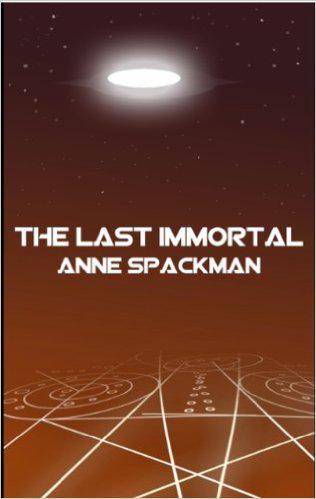 The Last Immortal by Anne Spackman
My rating: 4 of 5 stars
The Last Immortal(Seeds of a Fallen Empire Book1)by Anne Spackman
I tried reading this a while back and ended up putting it off to the side. When I picked it up again I had to examine it closely to better understand why I put it aside. This is one more novel to place on my love to hate list and that's not always a bad thing, so read on. Which is what I did this time and I'm glad I did read on. This is a book that deserves a five but for me there were some style choices that drop a star just in that the writing style made it difficult to read. It's a long enough novel at over 400 pages; but to have to stumble along while reading it, makes it cumbersome.
I often read the reviews before purchasing and I can see where some people might put this book down easily while trying to get into it; I know I did. My suggestion is to persevere, because the writing is good and the plot is good and the characters are well developed. There is the caveat that the reader has to work extra hard sometimes to understand all of this. Still there are a larger number of people who loved reading this and it does prove itself to be well worth reading. I'll try to explain.
I loved the concept in this novel and once I understood the style of writing and slowed myself down I was able to see the complexity of the characters. In fact; this is an epic story that might have been better split somehow into two separate stories. Yet again that's a style choice and much of the story becomes framed stories that tell the back-story that feeds the basic series plot. The story from which they are framed is the novel story and that fact adds to the confusion and again the need to slow down and absorb the two plots as they both converge and then diverge to reach the end of book one. The science in the novel could be somewhat flawed; but honestly I'm not sure exactly where; still if it was all solid, why then we'd be using it to get all over the universe wouldn't we. It is solid and well established within the story and I think the author holds it to be consistent within the story and it's so fantastically neat that it adds to the story.
So then what did I find so difficult about this novel. The prologue starts us out well because there is only one character in that portion; but as soon as we jump into chapter one the problem starts and persists for a period. This is told in a somewhat Omniscient point of view that likes to get subjective quite a bit; and that would work if it weren't for the immediate head hopping that comes out of the mix. Sometimes it became difficult for this reader to keep track of which head I was in. But more so it doesn't help that we dig inside the head then come out and get a full description of the character from some omniscient point above them. This is where the style choices work against the reader. It becomes difficult to feel the characters and see their depth when we keep spinning outside their heads to an un-anchored point that gives us a detailed description that this reader often filed away and forgot quickly. Still I can see one reason it was done this way; and that boils down to the fact that the author is trying to give the reader two epic stories in less space than it might take to do that.
The best parts of the novel are when we drop into the frame story that is first person from Alessia's point of view. But it takes a lot of back-story and world building to get the reader up to this point to connect a number of dots to make this makes sense. And even when it drops into the frame story there is another round of world building simply from the point that Alessia is not of the same world as Eiron; although the whole of cosmic history between races strives to bring everyone under the same universal origin. To that end Alessia's back-story is two fold which can again become confusing. Alessia has a past with Eiron's people; but she has a more urgent past with another civilization that could some day intersect with Eiron's people and she has a mission that she's, by all appearances, abandoned.
This is a story about immortals of two varieties. The machine's with downloaded intelligence and the biologicals with extended life; and the oppressive government that comes from having the long lived intelligent machines guiding humanity for so long. Through a horrible accident Alessia is the last of the biological immortals and she is tasked with finishing the task of thwarting the mechanicals; but she sidetracks her mission to a remote colony to look in on some of their normal people who were long ago sent to colonize a planet. While there she lets her emotions cloud her judgment and she creates a monster within a political environment that is already volatile.
On the other hand it's the story of two worlds on the brink of war while approaching a moment of impending doom that could take them both. It's also a love story and that's another piece I had some difficulty with. There are two love interests for Alessia and the first she rebukes for reasons I couldn't clearly define, though as the story works out it becomes apparent that he would be a bad choice. The second love interest felt as though it occurs too quickly and since the union is integral to the continuation of the series plot it almost seems a bit contrived. The whole dynamic created between the two men is made more interesting in the long run; though the realization of consequences of Alessia's actions plays a greater part in rounding out the story.
This is good SFF for those who love the epic fiction and have the patience to carefully sort through the multilayered plot presented through the back-story framing. There are some elements within the story that reminded this reader of the long story behind Battlestar Galactica.
J.L. Dobias
View all my reviews
 Marsbound by Joe Haldeman
My rating: 3 of 5 stars
Marsbound by Joe Haldeman
I bought this as a light read and since I've only read a few older books by Joe Haldeman ,Mindscape, and all my sins remembered, I would have to say I didn't come into it with great expectations. The pace of the novel is rather sedate, which is good for a light read; it's not a novel that starts the reader by hitting the ground running and ramping up the pace every few pages. My impression of the character was that she was written from the point of a 17 year old and possibly because of the sex scenes the age was changed to 19. But that feeling might be wherein lies the beginning of problems with this novel. Still overall I enjoyed the novel and I think that if someone is looking for a light read in science fiction that this one should fit the bill.
Carmen Dula is our heroin of this story and as mentioned she's 19 years old. Her family is headed to Mars, because they are one of several families who were lucky with the lottery for this trip. Carmen is resistant to the idea of going but seems to feel she's being dragged along and I would think at age 19 she'd do something more than grouse about it. Instead she acts like a 17 year old who grudgingly has to go along; so she'll try to make the best of it. But then later after she's met Paul the man who will pilot the craft from Earth Space to Mars there will be an intimate scene and perhaps the story then calls for an advanced age to make this one fly past some of our inner censors. But then if this were true Young adult fiction then the young girl who acts 17 would be 17 and the sex scene would be deemed less necessary or maybe toned down. But the choice here was to leave that in and that ends up making Carmen Dula look like an immature young woman and confuses just what audience this might be written for.
For this reader having Carmen show up as immature still causes the sex scene to be jarring and doesn't help efforts to give the character more depth. The relationship seems to be a device to put the character at odds with other characters and set the scene for the portion where the real story starts. And that's where another problem crops up.
The first hundred or so pages are at a rather slow tedious pace and would have worked quite well for me if the character development had been accomplished more efficiently. Some character development is there and there is a whole bunch of world building and setting the stage and giving the reader a feel that this whole trip into space is real. It's almost too real; though we don't really get much of the science behind the space elevator, we get a protracted picture of what it's like to travel on one. There is a lot of time spent on developing the passengers, the Dula family and the other families that are going along. This is all good except that there will be a point when few of these characters play much of a part in the rest of the story; while at the same time we don't get enough understanding of the character of Carmen Dula; unless the whole first part of the book was supposed to demonstrate how immature she is. This imbalance hurt the story for this reader.
The next part of the novel is the interesting part but then the reader has to wade through the issues caused by that early relationship before anyone else begins to believe Carmen witnessed the things she does witness. Still Carmen looks immature because it took a tantrum to put her in danger where she would make a great discovery. The other characters treating her like a spoiled immature girl forces her to continue to break the rules when her own life and the lives of all the children are placed in danger.
This is really a story of first contact and then one that leads to a more sinister contact that might be a danger for all of Earth. And by the third part Carmen finally has matured at least to her age level possibly because she has to face the consequences of her actions though I was never clear about that. It's not the easiest thing to see, but mostly it's not the easiest of things to be certain that Carmen even fully appreciates how much difficulty her actions have caused. And that gets thrown away a bit with the realization that this was all an eventuality with or without Carmen.
Over all Marsbound becomes a complete novel within itself with a somewhat complex moral message and sets the stage for the possibility of more stories. It also becomes another addition to the Mars books that started proliferating when there were rumors of eventual missions to Mars in our future.
Good Simon Pure Science Fiction that plays more on characters working within accepted technologies and delves only on the surface as regards how things are made and work, which makes for a perfect matching with character driven stories; though these characters could have used more development or at least maybe a bit more exposure before the plot thickened and drown them out.
J.L. Dobias
View all my reviews
